New Activity For A Free To Play Event
Six player spooky themed chaotic horde arcade style activity for Destiny 2’s Festival Of The Lost event
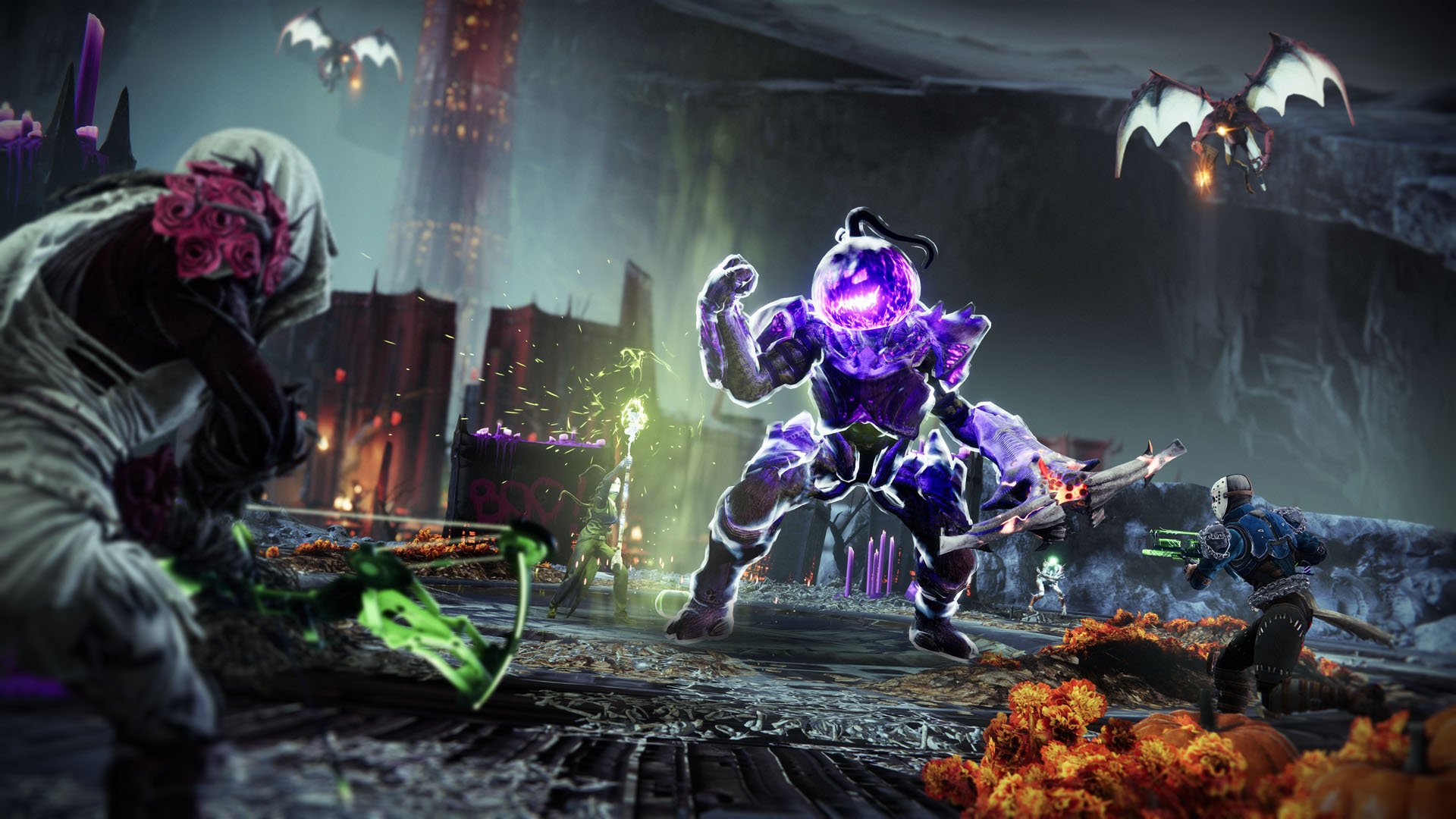
Players construct defenses to hold off waves of enemies emerging from an increasing number of altars, while gathering enough ‘treats’ from their corpses to summon and defeat a pumpkin headed monster
Owned the design of the activity from concept to completion, creating design documents, coordinating resources from external teams such as world art, and driving iteration in response to feedback from design leadership
Lead a small team of activity designers in the design and implementation of this activity
Stepping Up To Lead
In 2025, Destiny 2 went through a huge transition, and this revolution included a major revival and expansion of the Events Team. In this new paradigm for Destiny, a major focus was given to increasing the offering for free players, and continuously releasing new content and changes to the game as often as possible, often every week. The Events Team was at the forefront of making that goal a reality, and I had been put right back on it as an Events Team veteran. The team had expanded, with a new crop of designer recruits, and for the first time, we were working on adding new events, not just revamping the ones that had always been part of destiny 2. The pace and scope had increased, and Events Team leadership was feeling the pressure of keeping up the pace. So when I was assigned to a brand new activity being planned for Festival of the Lost 2025, Destiny’s Halloween themed event, I was given essentially one sentence of direction ‘Were going to update the Altars of Sorrow activity on the moon, but make it Spooky!” and a barely begun design document, which was not a workable plan to immediately begin production on an activity. I didn’t blame Events team leadership for this at all, they had so many plates spinning with trying to maintain and update the existing events while creating a plethora of new events large and small and a release schedule that had accelerated to almost week to week instead of season to season. In fact I had been asking for them to delegate me more responsibility so I could help take the weight off their shoulders. I’d had to essentially step into a leadership role on the Rushdown activity and do the work of two designers working on the Guardian Games event the previous year, so I knew I was ready and they needed my help. So I chose to seize the opportunity and began preproduction on the activity in earnest. I delegated laying the groundwork of the activity to my fellow designer, asking him to do the well understood and necessary work of creating a copy of the map to set our new activity in and porting the original activity that we were going to be basing our new activity off of into it. This would give us a canvas to work with once the design for the new activity was ready to move into production by giving us a version of the activity we could chop up to save what we needed and remove what we didn’t while also removing all the other content set in that map that would have ate up our memory budget since the original was set in the Destiny open world. Meanwhile I set about preproduction on the activity in earnest, creating a design document for the activity, setting design goals for the rework and planning out what we were going to build.
The Original
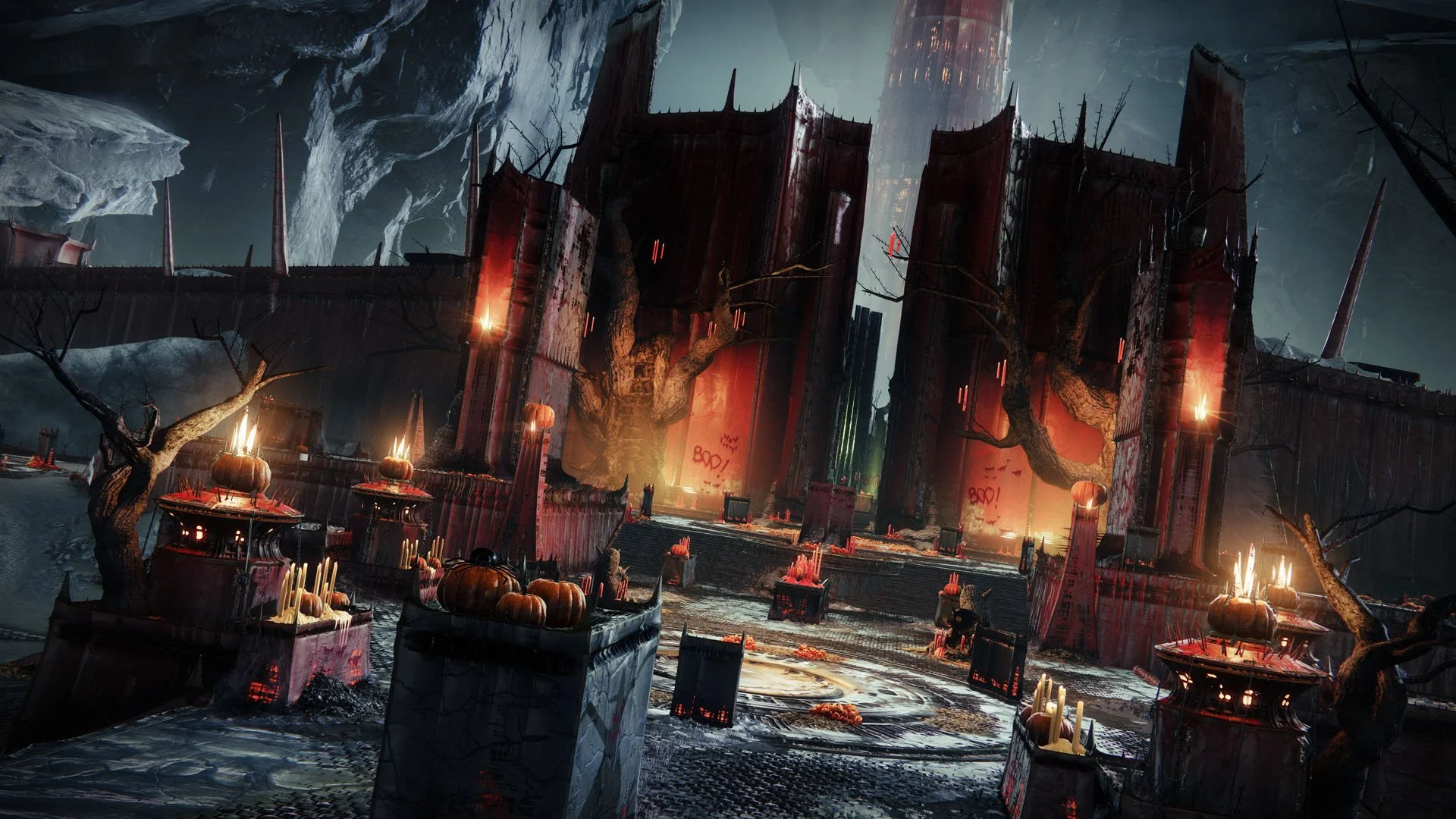
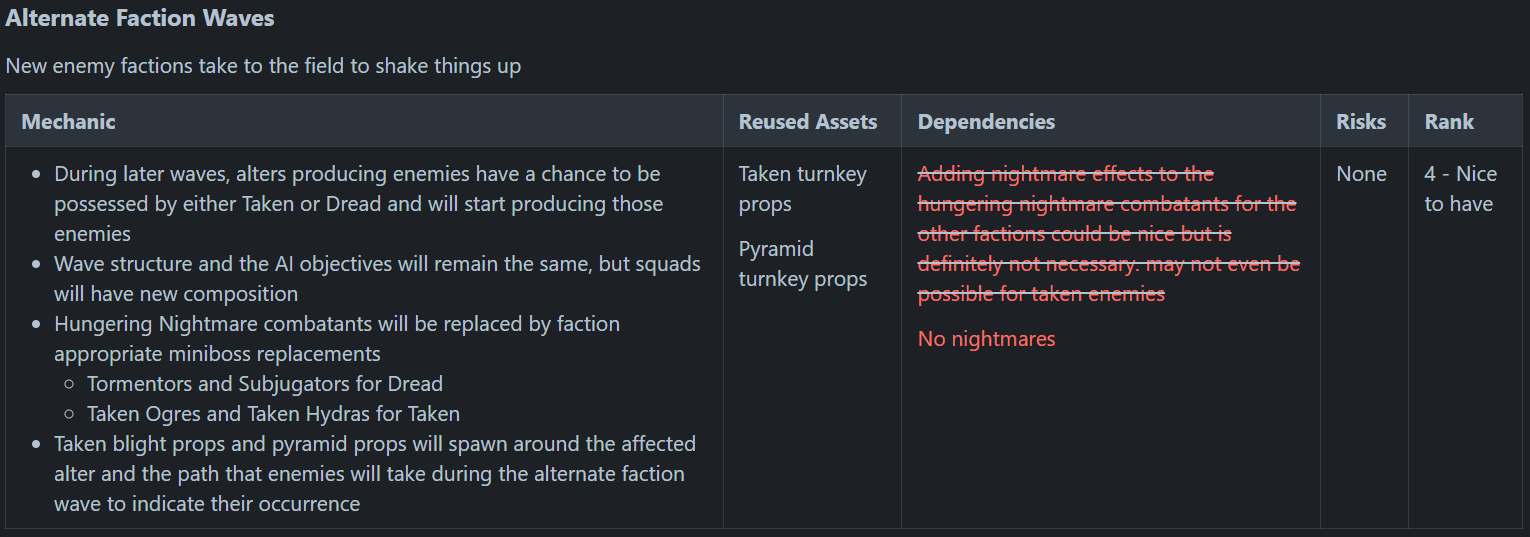
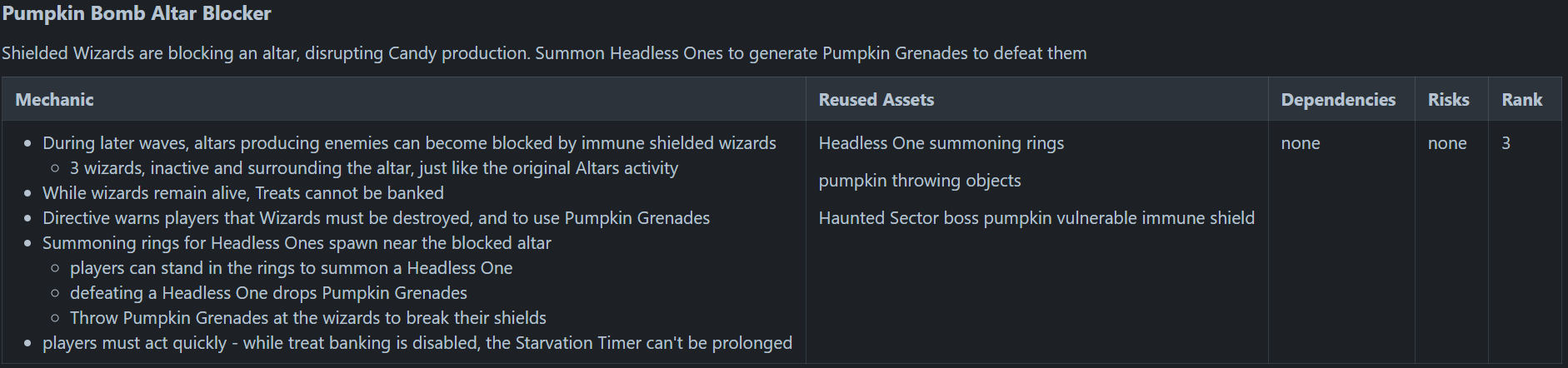
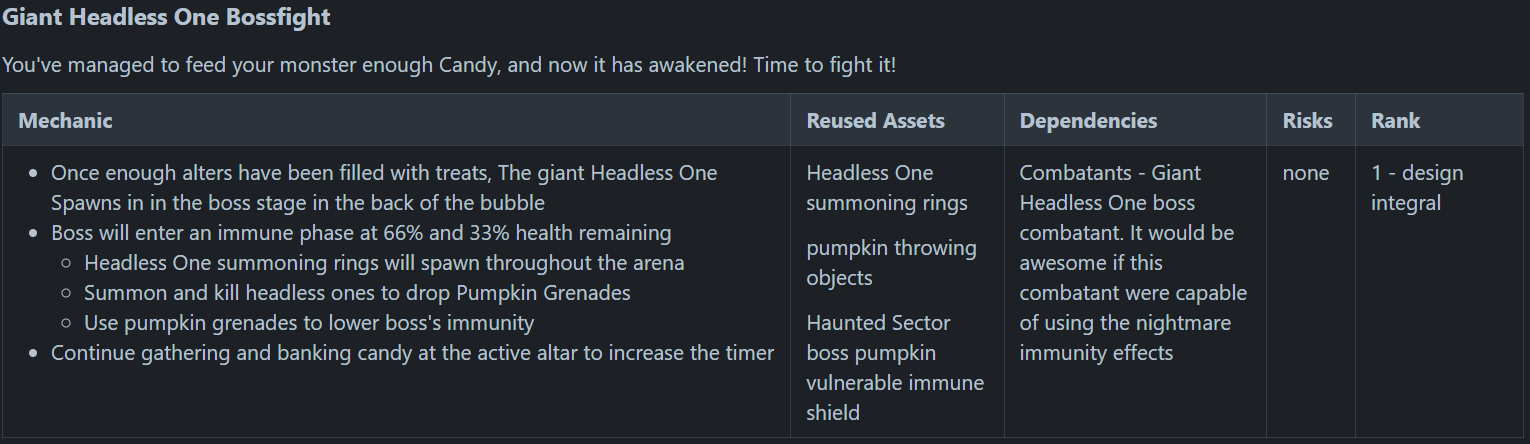
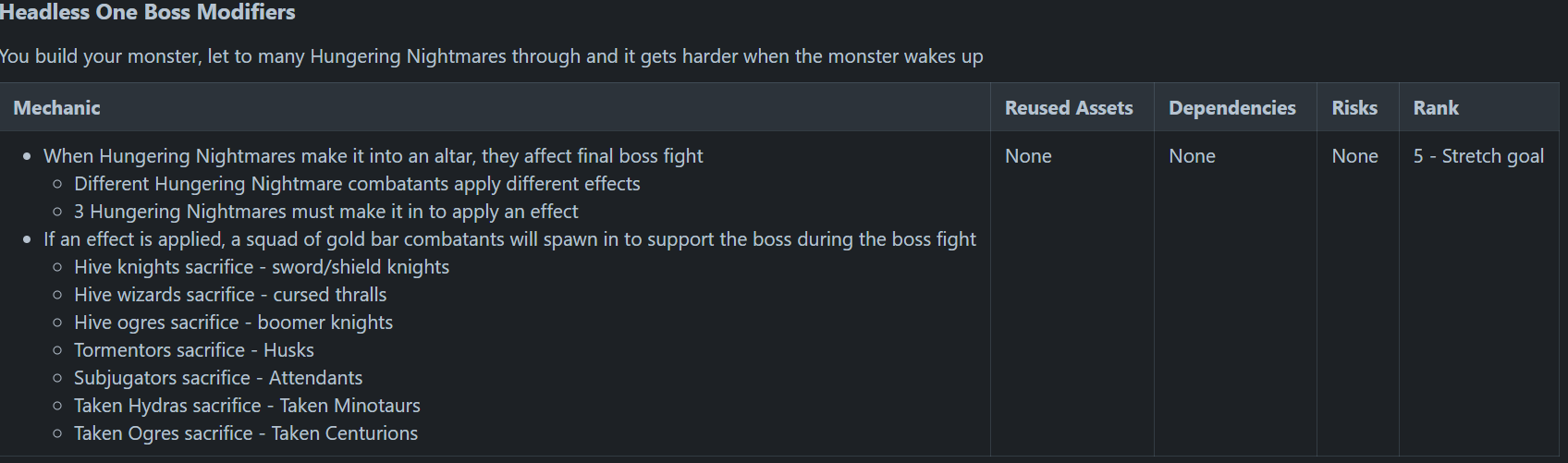
Having worked on many other event activities at this point, I had a good idea of what the goals should be for the Haunted Altars Of Sorrow. It needed to be wide funnel, accessible to the widest possible swathe of the destiny community, its mechanics needed to be simple enough that any player could succeed, and it needed to be enjoyable on repeat plays. It was also meant to be a rework of the original Altars Of Sorrow activity. That activity was an at this point quite old destiny activity that existed in the open world explore location on the Moon. The activity took place at the steps of the great Crimson Keep that dominated the skyline of the Destiny 2 Moon map. Distributed throughout the arena were a series of circular altars, and during the activity a pair of them would be active at a time, shooting a great beam of energy to the sky. Waves of enemies would spawn at one altar and make their way to other, with ‘nightmare’ minibosses punctuating every few waves. Players’ task was to defend the enemies’ goal altar, attempting to kill a target number of the minibosses before a timer ran out. If they were successful, a new pair of altars would activate and spawn even tougher enemies, and players would make their way there to defend. As soon as players approached an altar, a timer would begin ticking down, resulting in event failure if it reached zero. every enemy killed added time, while letting enemies make it all the way to the defense altar and sacrifice themselves subtracted time. My task was to evolve this activity into something fresh and halloween-ey. As I set about documenting my plan, I started the enjoyable process of brainstorming a series of possible mechanics and evolutions for the activity, just trying to find the fun and search for ideas I was passionate about. Once I had some exciting ideas to work with, I set about refining them into a plan for an actual activity, organizing the brainstormed mechanics by how critical they were to the overall design, nailing down and clearly describing the specifics, and then including a breakdown of design risks and support from external teams that would be necessary in order to pull each idea off. The goal with this process was to create a modular design that was ready to receive cuts and iterations, and to make it as easy as possible to prioritize where resources needed to be invested to make the activity successful. Since each mechanic was described and analyzed in this way separately, it was easy to cut them out or modify them if we had to, and gave us plenty of stretch goal runway if we progressed faster than expected and wanted to do more, and made the activity easy to break down to hand components off to different designers on the team.



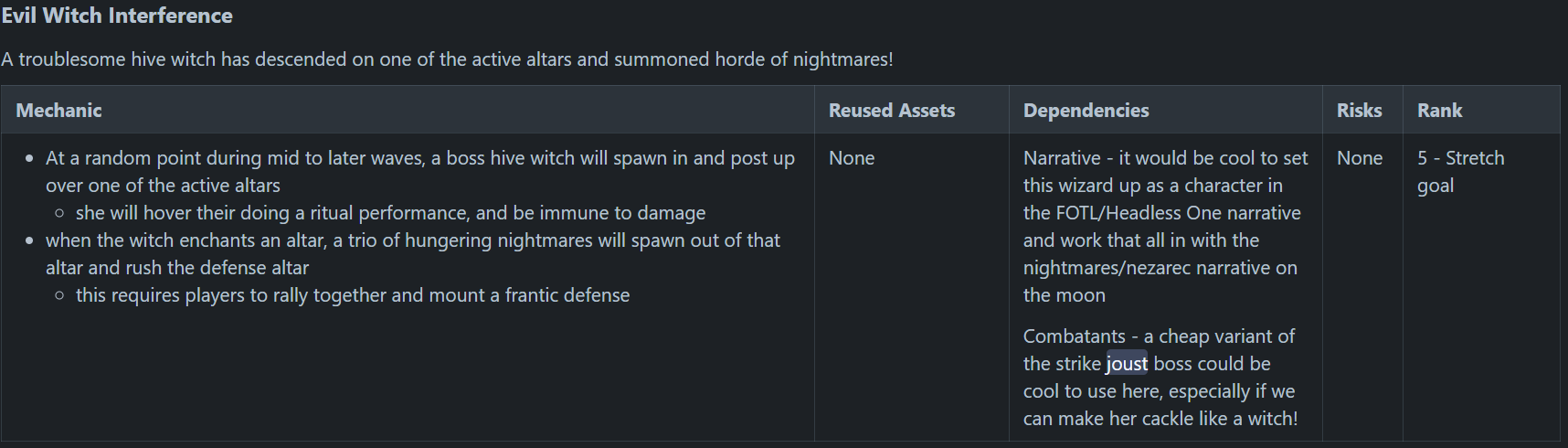
The First Iteration: Destiny Tower Defense
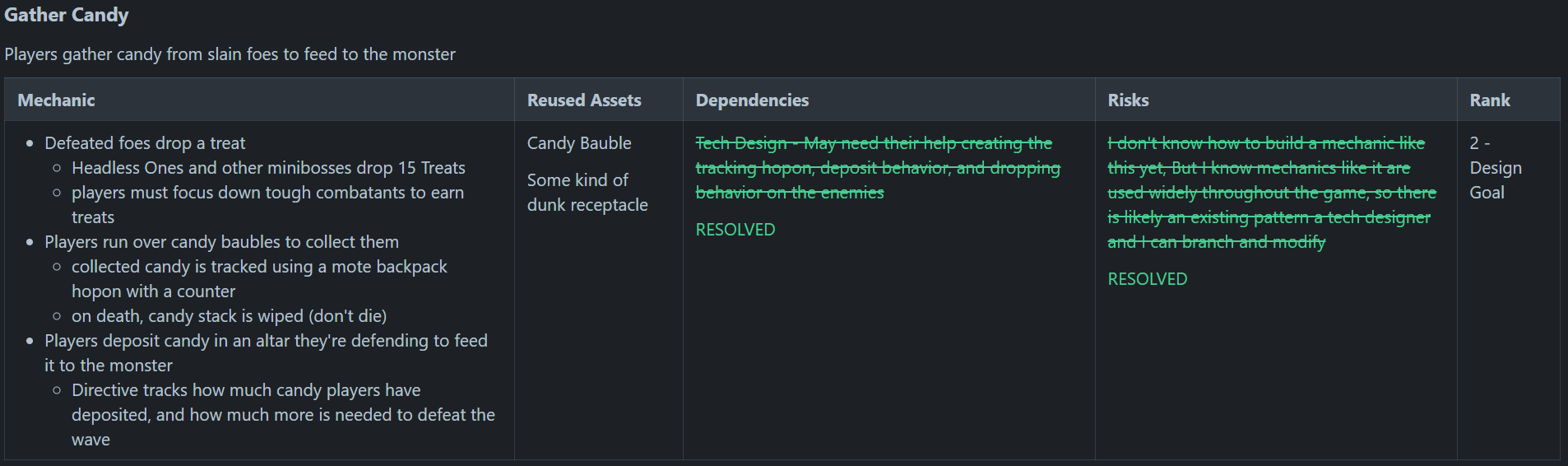
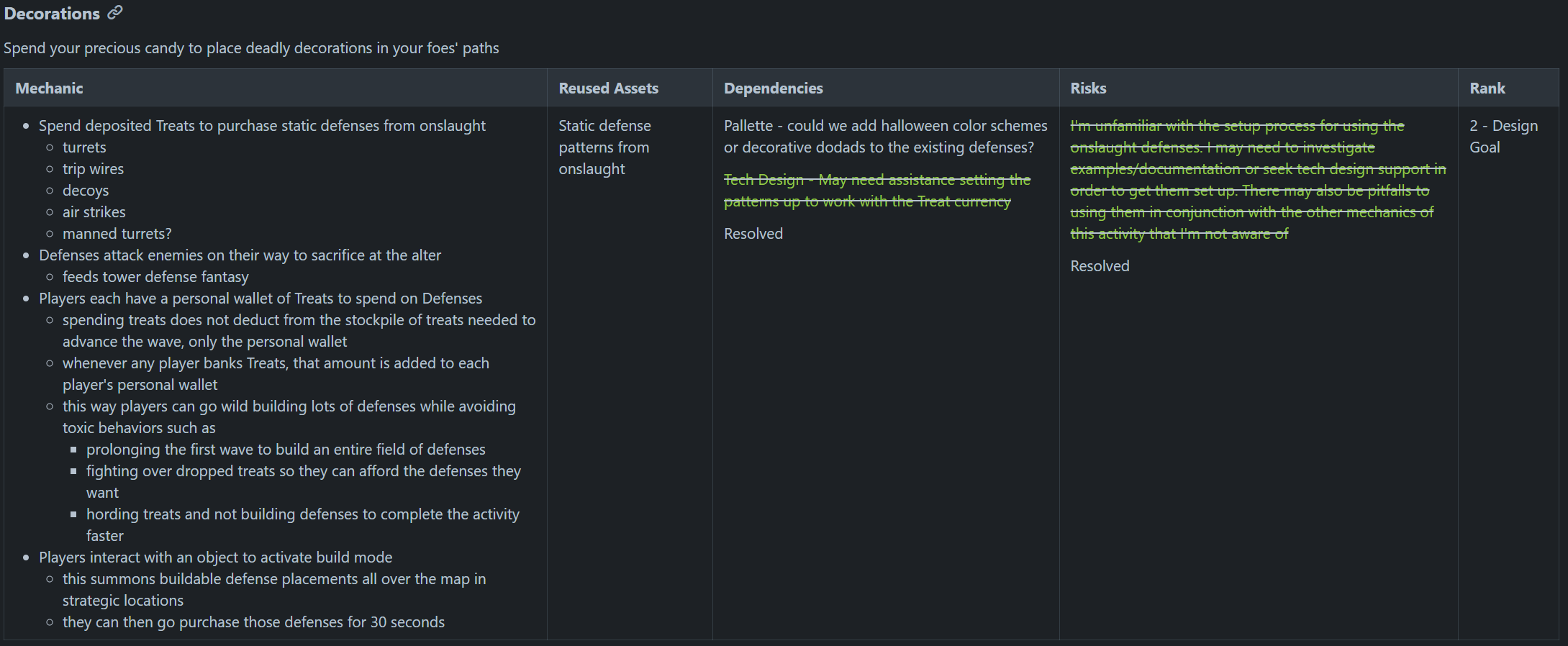
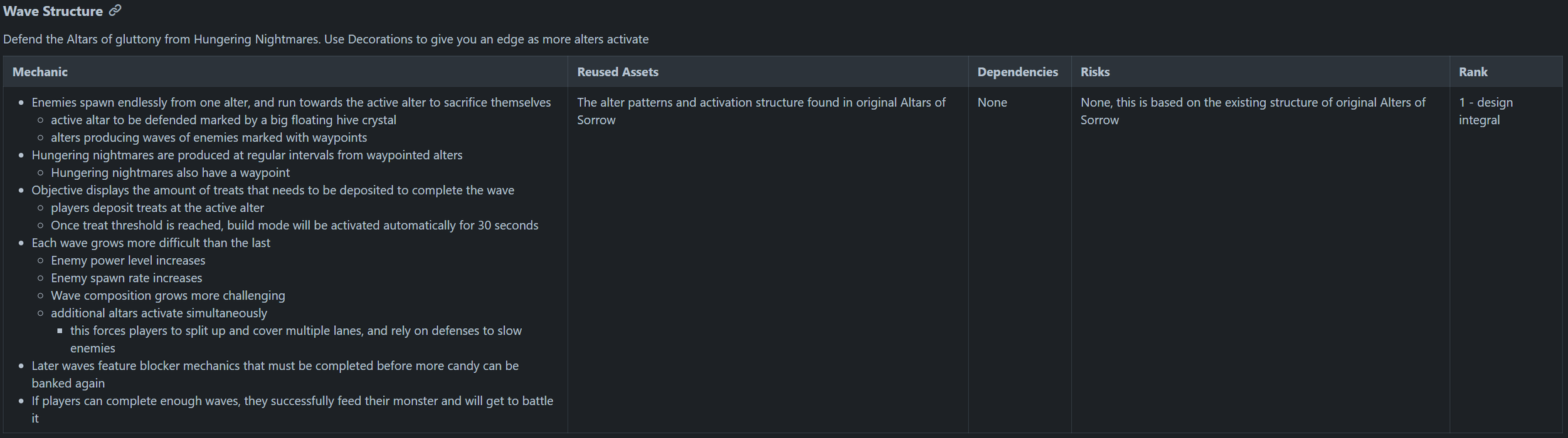
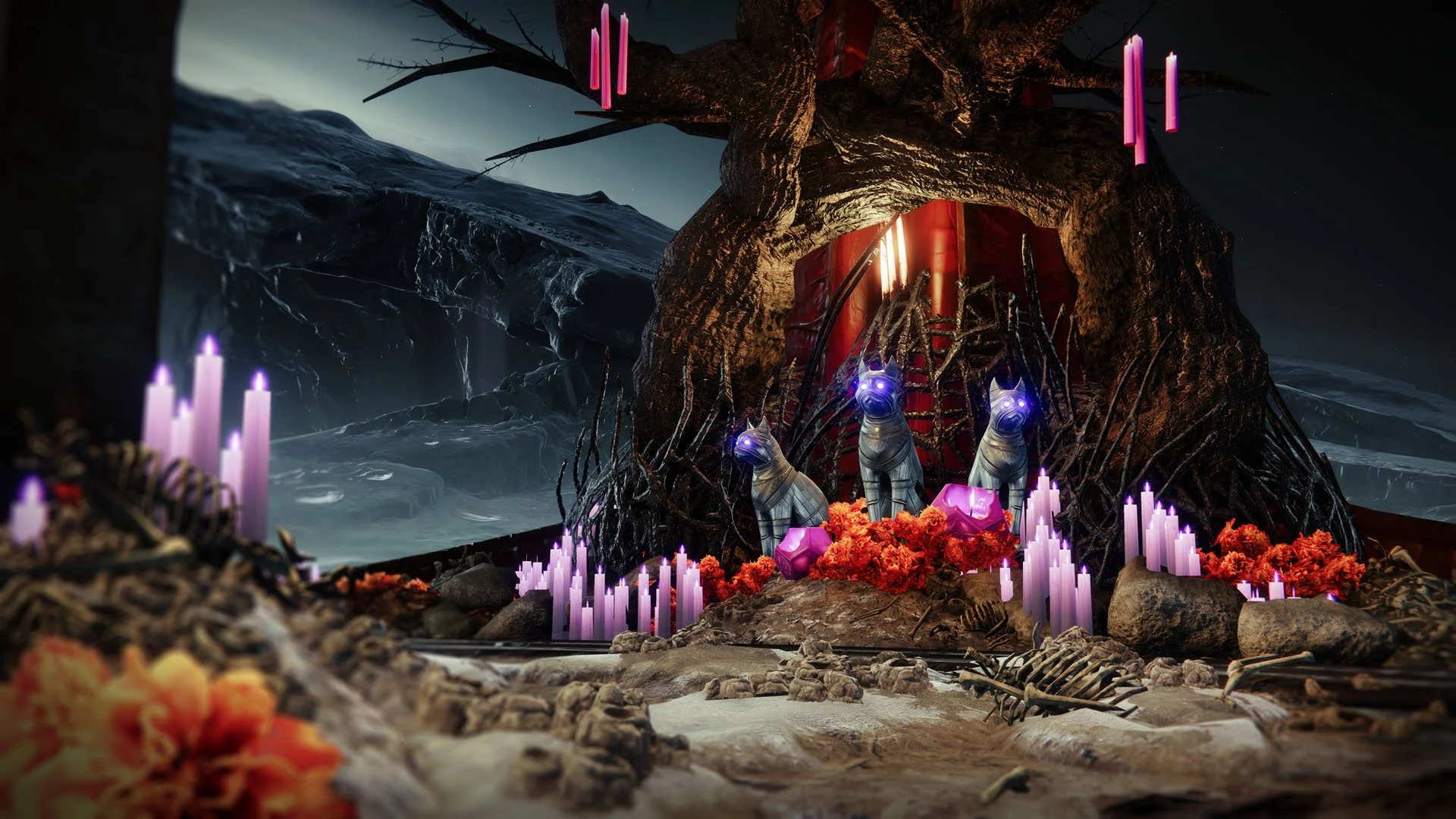
My initial design’s goal was to provide a fresh take on this structure by turning it into a tower defense. In the previous year of destiny, a horde mode style activity called Onslaught had been created, and with it a suite of player-purchasable automated defenses had been introduced, including auto turrets, freeze bomb equipped trip wires, and decoys to draw enemy attention, and the thought of leveraging these in a new way was the inspiration for this tower defense design. Working on the events team, we shipped fast and made do with minimal support from other teams at the studio, which meant we rarely got provided with new assets like this. Fortunately for Bungie, I thrived in this environment, as one of my strengths is finding creative ways to use existing assets to create fresh experiences. While working at Bungie I was always keeping a close eye of what assets and mechanics were being built for other releases so I could potentially draw on them in the future to leverage or combine them in new ways to create exciting novel content. Learning to use and modify tech created by other teams for different purposes in this way really helped to spur on my picking up diverse design skills during my career at Bungie. Here’s how the activity actually worked. The activity would have a matchmade fireteam of 3 players. Instead of the altar players were defending moving each wave, ONE altar would be chosen at the start of the activity to be the sole defense point for its duration. This would mean that each run of the activity, players would have to defend a different area of the map, making each run unique and enhancing replayablility. This defense altar was themed to contain a dormant ‘monster’, and the players’ goal was to feed it ‘treats’ in order to summon it to the field and battle it. As players cleared waves, additional altars would activate, forcing players to begin defending from multiple fronts simultaneously. Slain enemies during a wave would drop ‘treat’ pickups, which players could run over to collect, and then run them back to the central altar they were defending to dunk them in and feed the monster. Each wave would be completed once the players had dunked a certain threshold of treats. Enemies reaching the defense altar would ‘eat the monster’s treats’ and deduct from this total. I preserved the periodic miniboss spawning mechanic from the original altars, and had them deduct a much larger portion of treats from the tally if they managed to reach the altar. A time limit counting down until the monster ‘starved to death’ would be present during a wave as well, and players could buy themselves precious seconds with every Treat dunked. During the wave, players could interact with a console near the defense altar to enter a build mode, which would activate a series of points along each defense lane where players could spend treats out of their stockpile to create defenses. If players were able to successfully clear each wave and build their stockpile big enough, the boss would be summoned to a stage near the back of the field, and players could defeat it to win and recieve rewards! if they ran out of time, they would lose, and receive reduced rewards based on how far they got. We also added several new enemy factions to the defense waves, giving the altars an increasing chance at the start of a wave to begin spawning Taken or Dread faction enemies instead of the usual Hive.
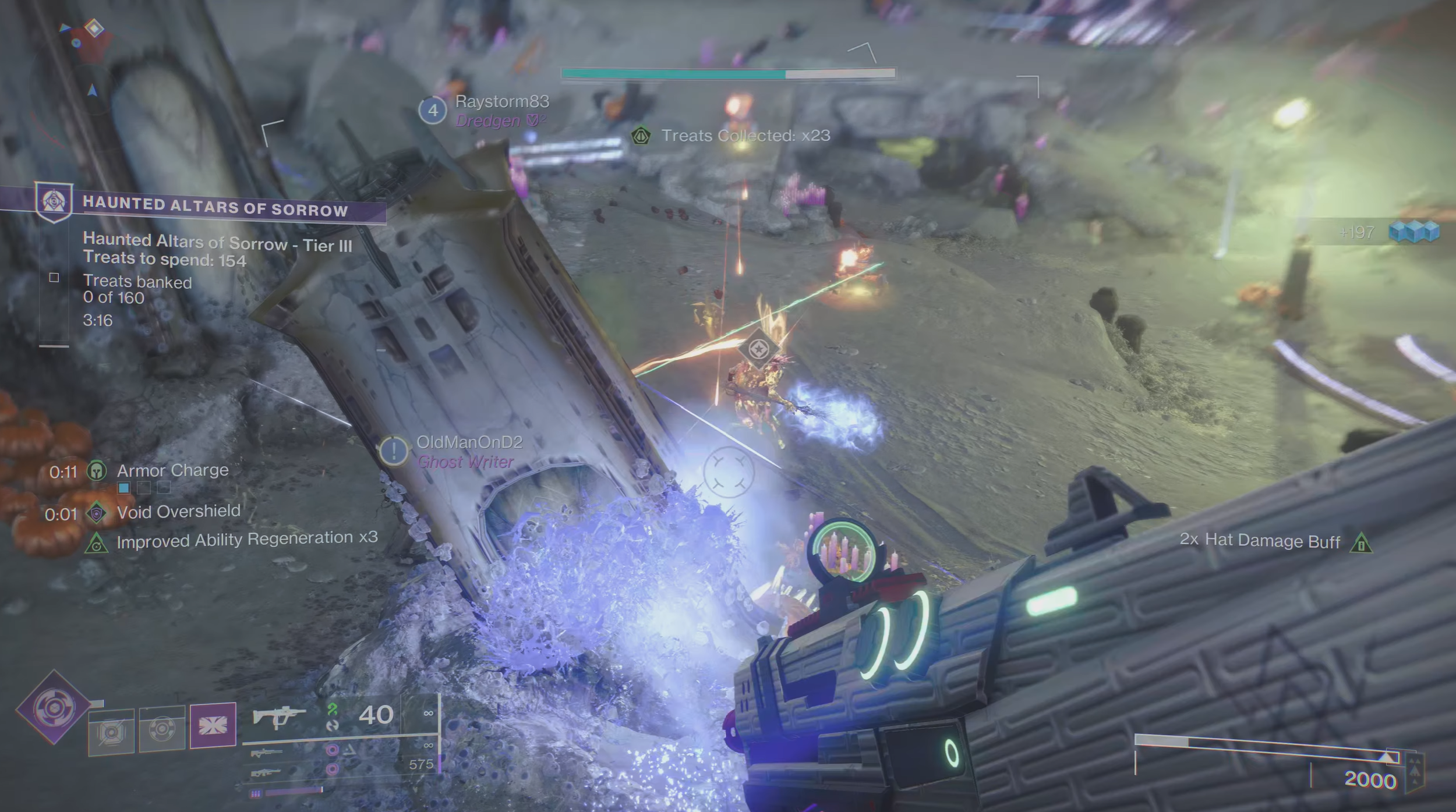
My little team and I built a prototype of the design laid out above in order to be shown off to Destiny design leadership during a major milestone playtest. I directed my teammate to focus on adapting the original activity’s wave structure and flow into our new design, as well as adding in the new factions and boss fight while I focused on the more technically tricky and unique elements of the design. He was happy to let me figure out how to implement the defenses and the treat system so he didn’t have to delve into Destiny’s arcane scoreboard tech. I devised a system that determined which altar was chosen to be the defense altar and only spawned defenses near lanes that were actually going to be used during that run, placed defenses ALL over the map in tactically effective places to slow the enemy advance, (that took a while) implemented the system that allowed players to trigger the build mode, created the treat pickups and and rigged the enemies to drop them on death, implemented the tech to allow players to collect the treat pickups and dunk them at the central altar, and most complicated of all, the economy system that allowed players to spend dunked treats to actually purchase the defenses. A key consideration during our whole build of the activity was memory. Our design and Destiny 2’s mature sandbox called for a lot of enemies on screen, and the turret defenses critical to our tower defense design took up that same budget. I consulted with the designers of the original horde activity those defenses had been designed for initially in order to gain an understanding of how many of them I could put in a map at once before exceeding the budget, and ensured that no lane had too many. Our design was ambitious and had a lot of moving parts, but we were able to cook up something that showed off all the mechanics for the milestone playtest. It was rough around the edges, but quite impressive for how quickly we had put it together
The Milestone Playtest: Tough But Hopeful Lessons
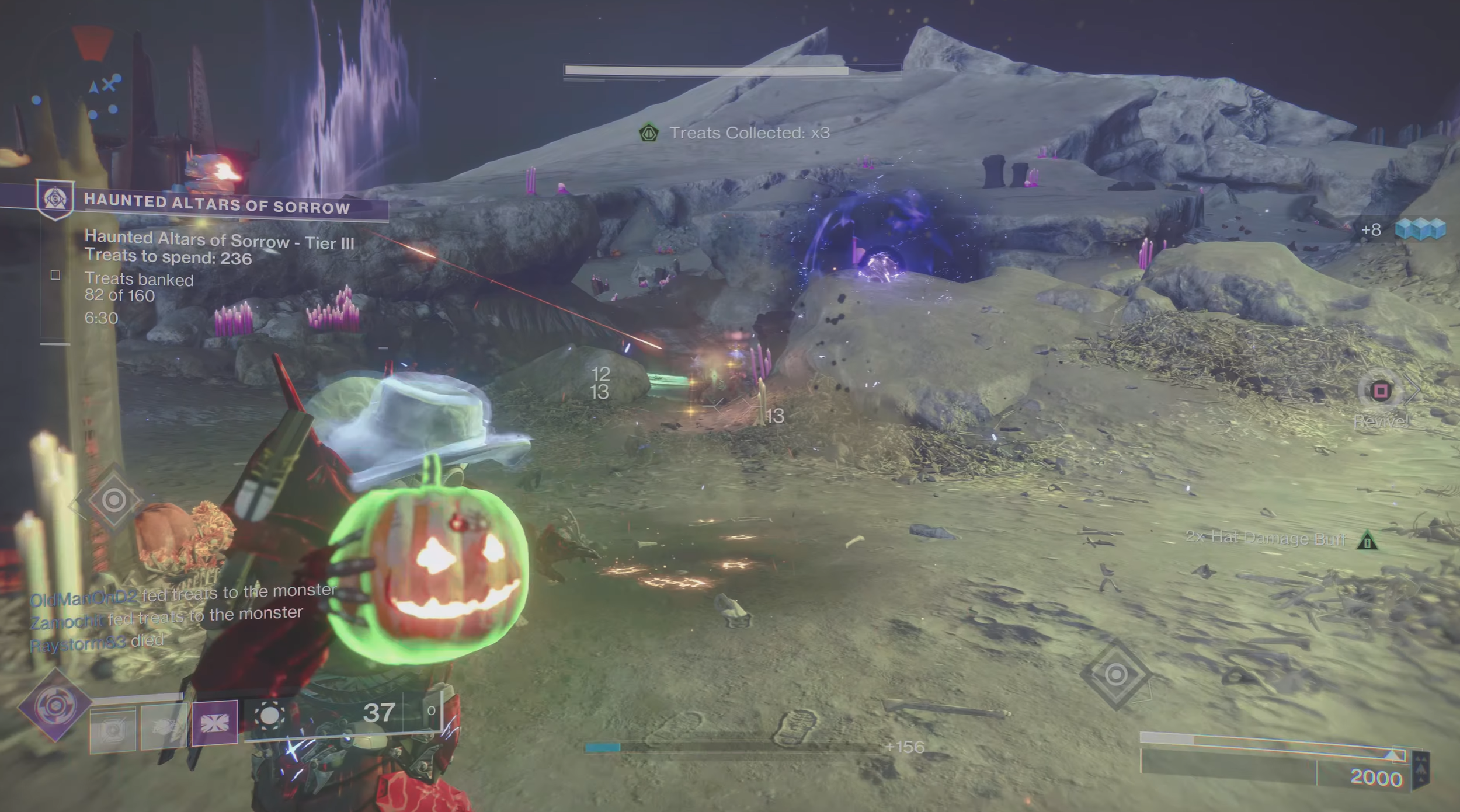
During that playtest we got some fantastic feedback, which we were able to synthesize into a new direction for the activity that better capitalized on the strengths of what we had actually created. But one thing was clear, we weren’t quite hitting the mark on the tower defense fantasy, and we needed to change course. Building games is a creative, iterative process, and though the concept for this activity was my direct brainchild, I was ready to let go of this core element for the good of the activity. I don’t hold my ideas too strongly, I draw creative fulfillment from the process of building the game itself, not from the ownership of the idea behind it. My ego doesn’t have a place in a team project like this, just the joy of putting the pieces together to make something awesome. This activity had a lot of rough spots, and we were experimenting with using existing assets in a new way that unfortunately resulted in only limited success. I could tell in the playtest that the systems and mechanics I had put in place in the activity were not having the experiential effect on the participants I had intended. Fortunately, Destiny’s seasoned design leadership were able to give me fantastic feedback on what things weren’t working and why. First off, the difficulty between the waves was not consistent. Waves featuring the Dread faction were significantly tougher than all the others, so any time the wave randomly switched to Dread, the players would often suffer a painful loss. The tower defense fantasy was also suffering because the map we were building the activity in was designed to be an open world space, and just didn’t have the defined lanes for enemies to flow through to evoke a proper tower defense fantasy. On top of this, the limitations on the number of defenses that could be placed further made that fantasy difficult to evoke. However, the greatest problems had to do with the whole Treat economy. My experiential goal for players with these systems was for them to build up their defenses in a lane during the early waves, so that during later waves when more lanes opened up, they would have enough defenses in the earlier lanes to hold the line so they could focus on the other lanes, and only return to sweep up the massive piles of treats dropped as the enemies ran into the defenses and died. Additionally, I wanted players to have to balance the reward of purchasing defenses that would ensure they could hold the line with the risk of spending treats out of their stockpile making the wave take longer and potentially running out of time and losing. Unfortunately this was not the experience players were having. I had a LOT of treats dropping. Every rank and file enemy dropped one, and the minibosses dropped 15, and the player had a massive Treat carrying capacity so they could gather up a huge load of them and drop them off. However, this meant that players were constantly having to run back and forth from the defense altar to the lane full of the constantly spawning waves of enemies just to keep the timer from running out, which on top of just being a chore, meant that they could not effectively fight and take cover. Moreover, the defense build system was causing problems, since while the build mode was active, the defenses would deactivate, meaning that purchasing defenses during a wave was way too risky, especially if players were counting on defenses to hold a lane all by themselves. We also just didn’t have the memory budget to put enough defenses in to hold a lane. But the biggest problem was that the risk/reward dynamic I tried to set up with spending treats out of the stockpile had a massive hole in it: Since banking treats in the defense alter gave you more time but also delayed the completion of the objective that ended the wave, the dominant strategy became to buy every defense available on the map during the first wave by just continually banking treats to earn more time, and spending them on defenses to prevent the easier first wave from ever ending. There wasn’t anything actually pressuring players to move to the next wave to create the risk in the risk and reward dynamic. We had a lot of work to do.
The Refined Iteration: Absolute Arcade Mayhem
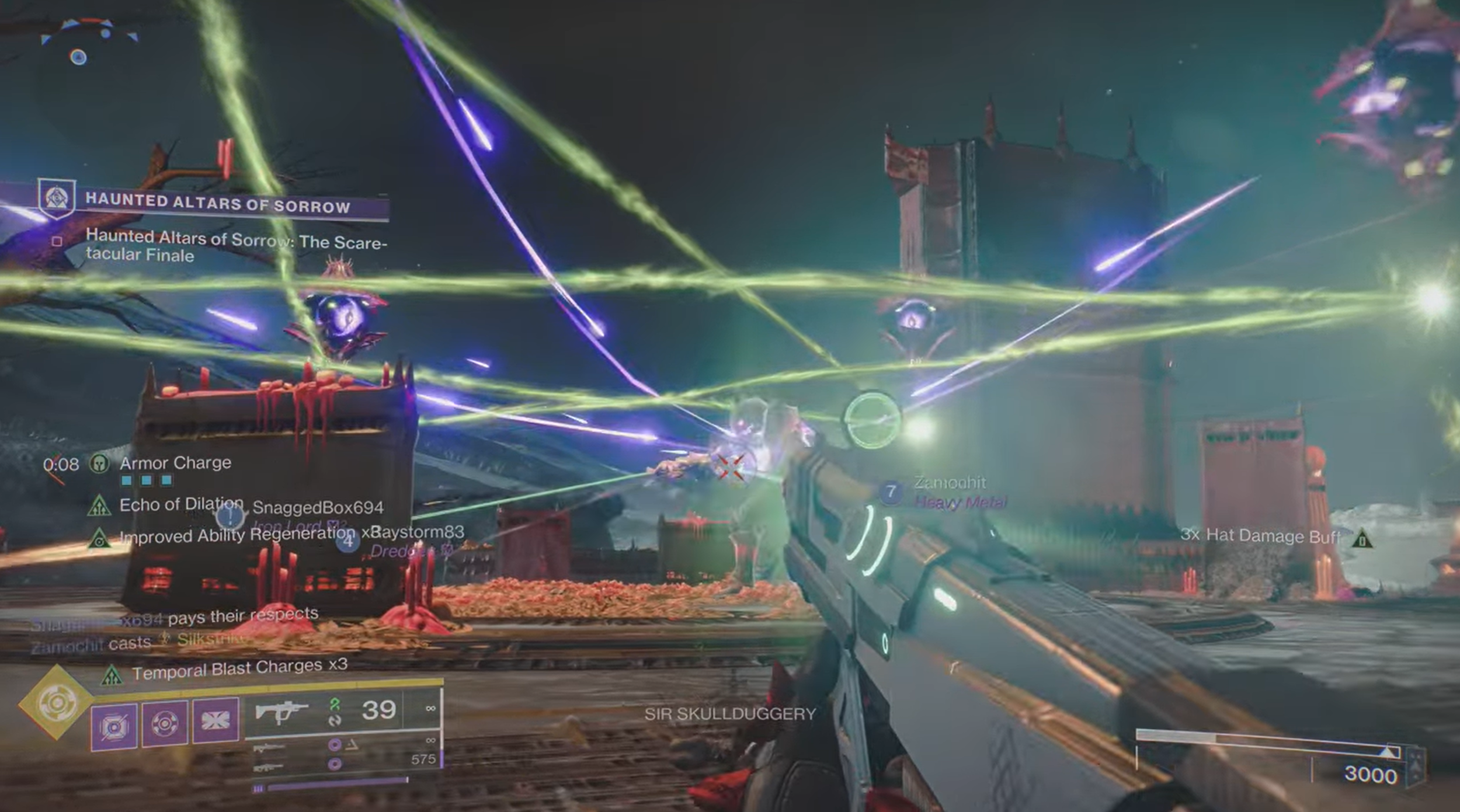
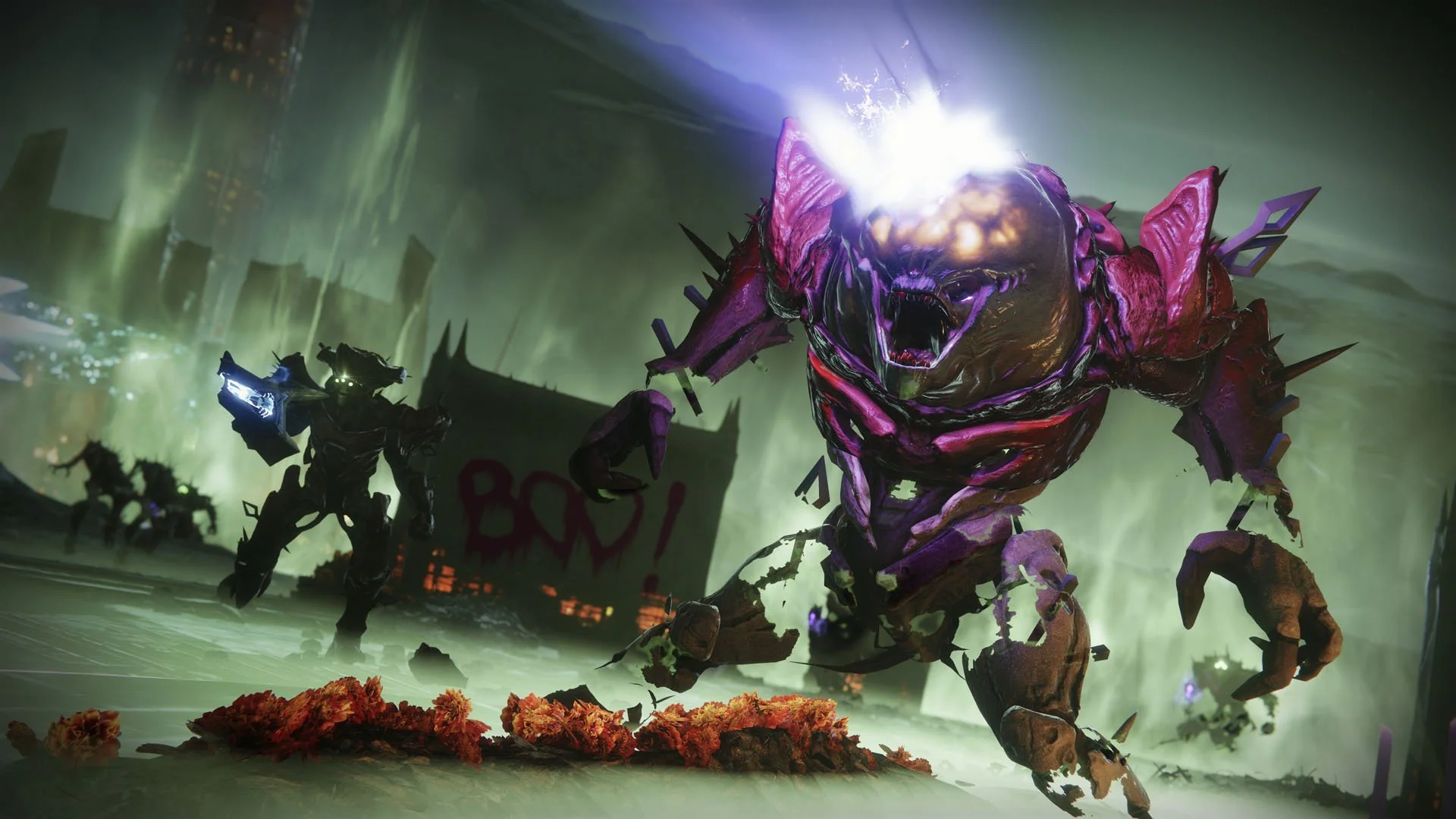
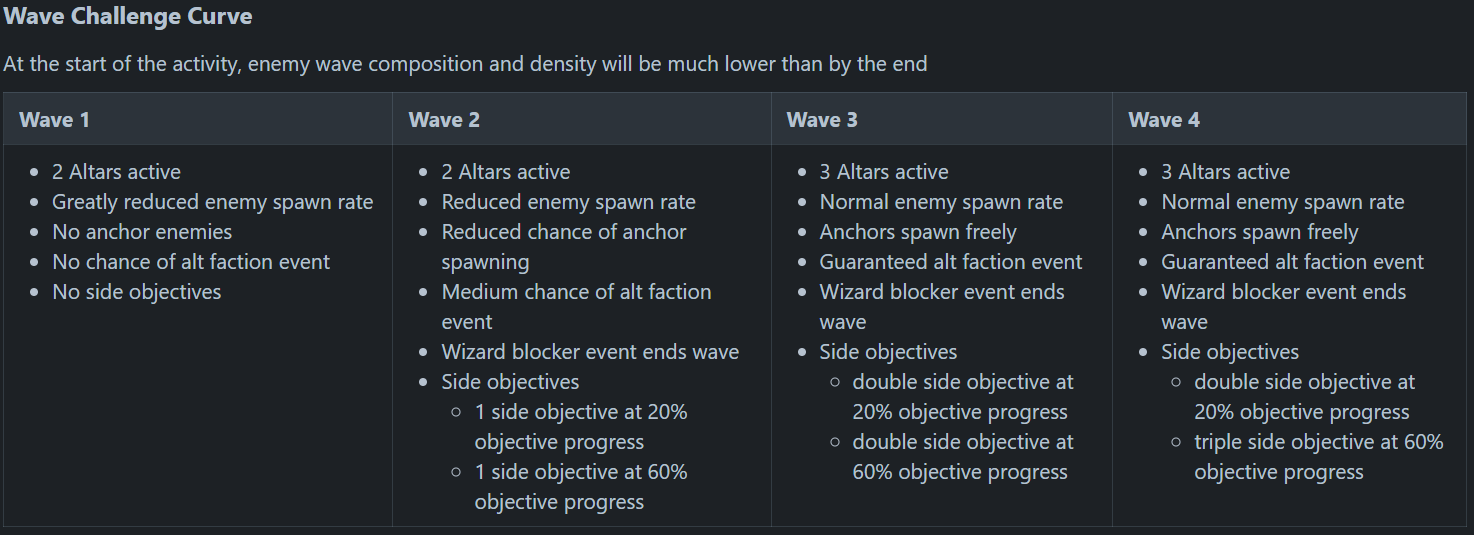
The feedback wasn’t all issues, we also got an awesome suggestion that had me moving into implementing the feedback with excitement: we were going to up the player count of the activity from three players to six, making Haunted Altars Of Sorrow Destiny’s first six player event activity! With the size of the map and the amount of enemies and chaos the activity already had, the idea made sense and had me creatively stoked. Players were often struggling to keep their heads above water in the later waves, so it seemed the perfect opportunity to add more players to back them up. We immediately set about updating the activity to address the feedback we had gotten. We switched up the wave structure so instead of Taken and Dread faction waves spawning on a random chance, we settled on a new four wave structure: wave one had Taken enemies from a single altar, wave two had hive enemies from two altars, wave three had hive enemies from three altars, and wave four had Dread enemies from three altars. If players defeated all four of those, they reached the boss fight (more on that later). This gave the waves a much more satisfying and consistent progression of difficulty. The whole Treat economy and defense system got an overhaul as well. The defenses were reconfigured to focus on guarding the defense altar rather than trying to hold lanes that weren’t really there in the map design. Additionally, we gave the players a designated build phase between waves instead of the build mode activation system. This suited the design of the defenses better and gave the players a nice break to reset between waves. Treats were altered to no longer drop from every enemy, instead only dropping from the minibosses in clusters of fifteen. This, coupled with the new six player count, reduced the amount of running back and forth players needed to do while still preserving the 'picking up treats’ fantasy. We also unhooked banking treats from earning more time, returning to the system from original altars of sorrow where each enemy slain added a second to the clock. Lastly, we separated players’ treat wallet for spending on defenses from their treat stockpile to complete the wave, eliminating the issues with the failed risk/reward element. Moving forward we got a third designer added to the team that let us continue to add more crazy features that took the activity to the next level of unmitigated arcadey chaos. We added a mechanic that spawned a cluster of throwable pumpkin bombs from the defense altar if players banked a large cluster of treats at once, and we added side objectives that periodically spawned through out the map. A player could take a break from their wave clearing to venture out and capture a zone some distance away from the rest of the action. this zone would spawn a pumpkin-headed miniboss which would drop a large crop of treats once killed, as well as a wieldable flaming scythe super weapon from a previous season that the player could bring back to the fray. One of my favorite touches we added was spawning an invulnerable kneeling smaller version of the pumpkin-headed boss combatant players were to face during the boss encounter to the defense altar. He’d spawn in at the beginning of the activity, kneel down, and activate the defense altar as a little intro for players at the start of the activity, and really helped sell the fantasy of feeding treats to the monster to summon it, since he was always there. We worked with world art to fill the map with candles, jackolanterns, and other spooky props to dial up the Halloween festivity. We also turned on every exciting and flashy gameplay modifier we could, dialing the whimsical chaos as high as it could go. The end result was an enjoyably chaotic six player arena horde battling mode with a great ramp up and nonstop action. it was pretty fun and crazy running around fighting for your life while pumpkin bombs flew across the screen, turret crossfire was thundering away, and five other players were all fighting beside you holding the line on multiple fronts! Here’s a video of what a playthrough of the activity commonly looked like
Rescuing the Boss Battle
In our final rounds of feedback, we were realizing the boss encounter wasn’t where it needed to be. One of the other designers on my little team had been working on it and had been going through iteration after iteration with the boss’s core mechanic, and was feeling at his wits end. He had devised a symbol based puzzle that players needed to solve to break the boss’ shield. Unfortunately, despite multiple rounds of simplifications it was just too complicated. Players were having too much trouble grasping what to do during all the chaos of the boss encounter happening around them, and despite having six players in the encounter, only one could actually do anything to solve the puzzle at a time. We needed a new approach, and I had a great idea. I placed five interactable ritual sites in an equidistant ring around where the boss stood, each with a floating inactive hive Shrieker turret combatant high in the air above it. These ritual site interactables were reused from Destiny’s Season of the Witch, which had a spooky occult vibe that fit in with our festive Halloween theme, and had players wave a magic hive staff in the air as if invoking a spell when activated. Each of these five sites would have a waypoint over it to draw players’ attention, and when interacted with would summon two beams of glowing green hive magic connecting it to the two other ritual sites across the ring from it. These beams would dissipate after a short time, but could be summoned again by simply re-interacting with the original ritual site. While the beams from a ritual site were active, activating one of the other two ritual other sites the beams connected to would cause that beam to persist. If players interacted with all five of the ritual sites within a few seconds of each other, all the beams would persist, forming a big spooky hive magic pentagram beneath the Shriekers over the boss’ head. This would cause the Shriekers to awaken and target the boss with their attacks, which would burn away its invulnerable shield. The Shriekers would then stay awake for a while longer, helping the players fight other enemies in the boss arena. This mechanic was an elegant solution to the problems we were facing and fit our goals for the encounter perfectly. It was extremely simple to grasp, requiring no puzzle solving or tough decision making, just that players run over and use an interactable. The mechanic also had room for five out of the six players to participate at once, so it was more suitable for the activity’s player count, however it did not require coordination from the players in order for them to succeed. Players could use the interactables in any order, and there were no consequences if they took to long, so players just stumbling around hitting ritual sites would still inevitably fail forward. In fact, I timed the life of the beams to be long enough so that even a single player who knew what needed to be done could run through and interact with all five to carry a clueless lobby. What the mechanic lacked in complexity It made up for in spectacle, the glowing green hive magic pentagram in the air above the boss’ head looked very cool and thematic. It was particularly impressive if five players could synchronize their ritual activations so the pentagram formed all at once!