Activity Design Project - Destiny 2 Beyond Light
3 player cooperative Strike mission in Destiny 2
Remastered and reimagined beloved Strike mission from Destiny 1
Built 3 encounters, including a boss fight
Working on this strike was truly a labor of love, and to this day remains one of the pieces of content I am most proud of in my career. Towards the end of my time on the v500 porting team, I was assigned a special task, outside the original scope of my contract role: remaking the iconic Devil’s Lair Strike mission from Destiny 1 and updating it to fit into Destiny 2. This strike had a very special place in our community’s heart as it was Destiny’s very first strike, the first one to be unlocked when playing vanilla D1, and the only strike featured in D1’s pre-release beta. For many of Destiny’s hardcore fans, this strike was a major part of their very introduction to the game, the feel of its world, and set the standard for what they could expect from its activities. The encounters and moments of wonder they experienced way back then were all completely fresh, and the memories of playing it for the first time in the early days were written into the game’s very spirit. I knew this for an absolute fact firsthand, as I was right beside all those fans myself in the D1 Beta playing the Devils Lair Strike over and over as I soaked in Bungie’s new world with the rest of the community. So I knew going in to this project, it wasn’t going to be a mere quick straight port. I needed to fully remaster it to recapture and reproduce those feelings in D2, a game with a very different sandbox than D1 where those feelings were born. Setting to work, I ported the strike into destiny 2 in its original form, and then quickly realized I was going to need to rip out the floorboards and build a larger and life version of the strike as it existed in players’ emotional memory. Here’s how I did it.
Encounter 1: Classic Ghost Defense
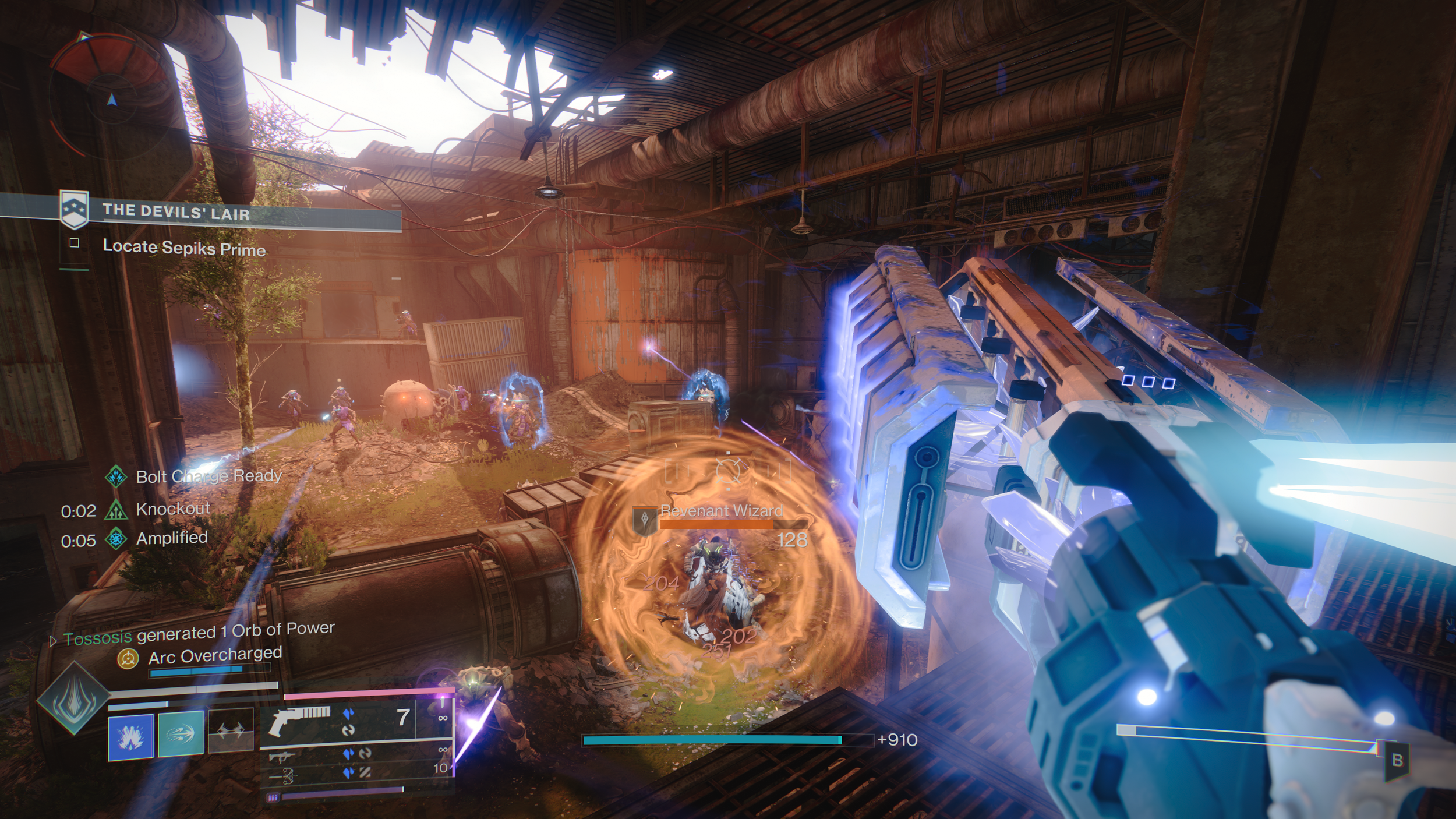
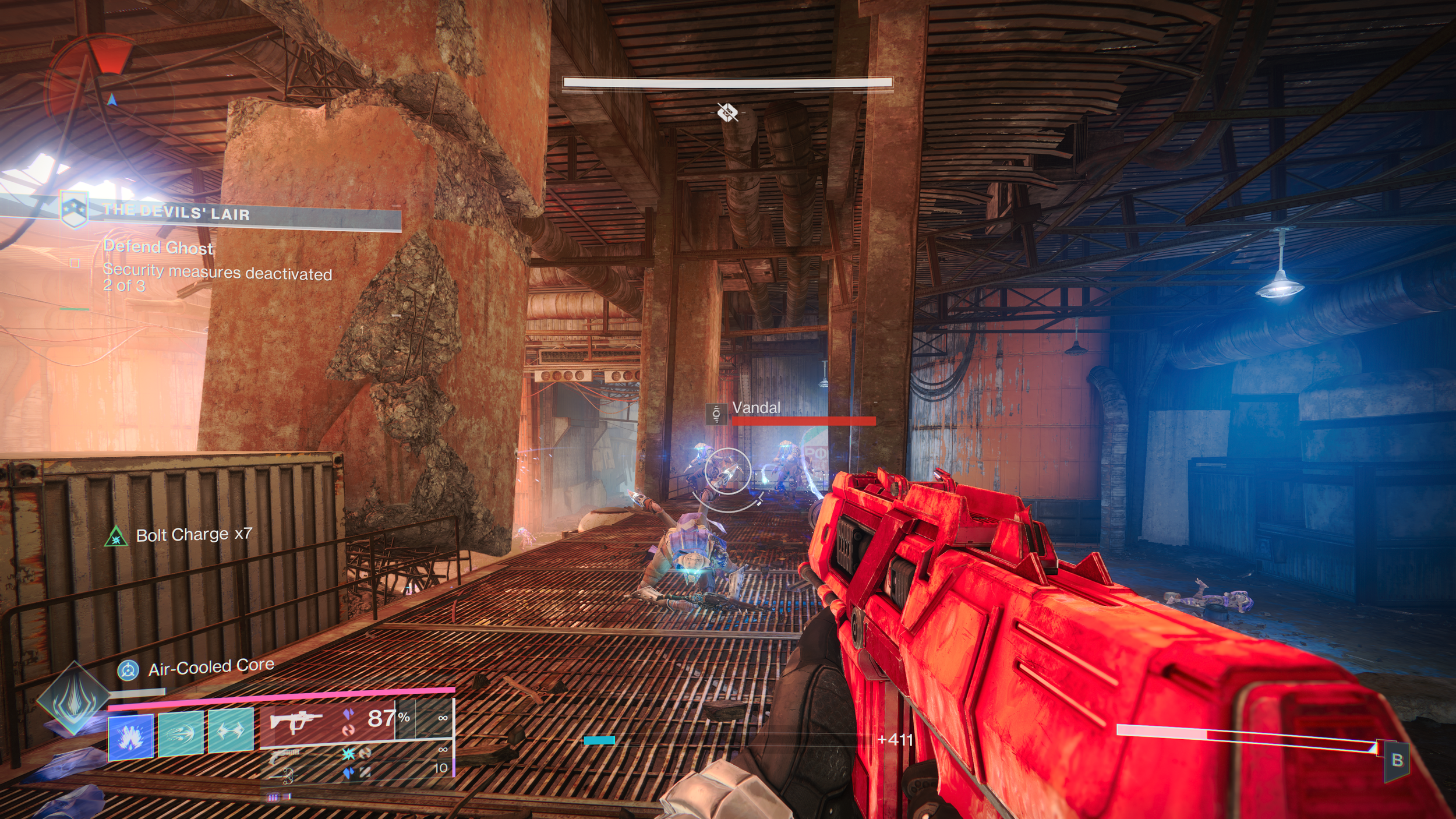
I started with the strike’s first major encounter. In the original strike, it consists of the players Fighting their way into a Fallen stronghold in the cosmodrome, which is also under attack by the Hive. They battle their way to a chamber where the Fallen have set up a reinforced defense along the path ahead and the players must deploy their Ghost robot companion to hack the Fallen defensive tech, while defending him from three waves of enemy combatants. Right off the bat, this encounter confronted me with the fundamental challenges of porting D1 content into D2. D2 is simply a bigger game than D1. Its spaces are larger, and the number of combatants is way greater than was even possible in D1. The sandbox reflects this, in D2, individual combatants are less threatening, but they have much more diverse abilities and behaviors, and they press farther into the players’ space, and they are more numerous. The Player moves faster and outputs much more abilities and area damage. Going forward, I knew the main thing I was going to have to do to every encounter in this strike was plus them up: more enemies, more threatening enemies, more close to the player. Without doing this, the strike as it appeared in D1 would feel anemic and disappointing in D2. I also needed to latch onto the emotional themes for each encounter and plus them up too. The major theme I focused on for refreshing this encounter was the three way conflict between the players, the Fallen, and the Hive. Having the player third party a battle between AI combatant factions is CLASSIC Bungie style, and the environment art around this encounter was already littered with built in evidence of this narrative, which gave me opportunities to take it even farther. In the chamber just before the main defense room, a Hive Seeder drop pod has crashed through the roof. in the original strike, this space was left empty and unused. I chose to add a little battle there between the Fallen and Hive, with a hive Wizard sending a swarm of thrall screaming out of the drop pod’s gate to attack some fallen defenders just as the players burst through the door. I tinkered with the timing on this moment quite a bit, running the encounter over and over to ensure that the squad of thrall emerged just as the players entered the fray. I loved adding encounters like this that made use of the environment in an immersive and natural way that advanced the themes of the mission. With every enemy I placed, I tried to think in terms of “What would this alien soldier logically do if they were in this battle? What are their goals? What are their relationships to the other combatants in their faction?” With this I hoped to make the encounters feel alive as opposed to just a game-ey obstacle for the player to smash through
Encounter 2: ‘Fallen World War 1’
The second encounter definitely provided the greatest challenge in recapturing the spirit of the original. In D1, the encounter centered around a battle with a Fallen Spider Tank, a super sized, multilegged, immobile, insectoid mecha-tank of monstrous size that dominates a platform in the back of the encounter arena. This thing was one hell of an action set piece back in the day. It featured an awesome bespoke spawn animation where it would cling to the belly of a dropship with its many legs and drop into the action, and a massive canon that made a terrifying noise and was capable of killing the player character in 1 shot. In D1, this level of threat and novelty was all it took to create an unforgettable encounter, especially since this encounter was the first time the enemy appeared. The challenge with updating it was that the Fallen Spider Tank was simply not as threatening in D2. Though they still had their massive canon, they were able to be destroyed so much quicker. I needed to find a way to make that walker feel as threatening and powerful a centerpiece in D2 as it did in D1. Fortunately for me, D1’s designers had left me a resource I could use to solve this problem: real estate. The space where the encounter took place was quite large, and full of dynamic areas where plenty of encounters could take place that were just unused and empty in the original design, much like the seeder chamber I plussed up in the previous encounter. I chose to fill that space with a series of defense lines of Fallen troops, with the goal of putting enough pressure on the players that they would have to engage with the fallen infantry defense lines before they could get close enough to nuke the Spider Tank, giving it time and space to threaten the players with its main gun and help them relive those memorable moments of terror they felt when facing it in D1. Players would have to do intense combat with large groups of Fallen infantry, all while keeping one eye on the tank, ready at any second to slip to cover when they heard that telltale drone of the canon’s targeting system, or perish. Once again, when designing this encounter I used the fantasy first approach: I put myself in the Fallen’s minds as I placed and scripted the combatant squads, spawns and objectives. I placed fallen squads in three defensive lines, snipers in back, riflemen and shielded captains holding the more open center, and melee dregs scuttling around the ruined buildings the player entered through, all of them with scripting to make them fall back and swarm the player if they dared sprint through to skip ahead and strike the walker. As an avid destiny player myself, I was all too familiar with this somewhat toxic tendency of trying to run content as quickly as possible by just sprinting past encounters and not engaging, leaving newer players behind. This was particularly a problem with older D2 content since as the game matured, the sandbox changed and players got more powerful, making older strikes a lot less engaging and easier to skip than they were when they were released. Players can hardly be blamed for doing this, you get rewards at the end of the strike, why waste time fighting the enemies when you can sprint by them with no consequence or annihilate them with a single grenade and get there faster? It falls to us as activity designers to make design choices and put in the extra effort required to make engaging with the activity content in the way that creates the most rich and fulfilling gameplay experience also the best tactical decision. By using Bungie’s engine tools to their fullest extent to make enemies react and respond to players movements as though they were a real military force and not merely bowling pins to be knocked over, I punished the players for behaving in a way that reduced their own fun through consequences that felt like the logical tactical result of their own actions, and enhanced the fantasy. If you run past the Dregs and Vandals so you can blow up the Spider Tank and leave, those soldiers will chase you, swarm you and punish you for diving into their territory, instead just standing in their one assigned firing area and watching you leave like some dopey video game enemy. I knew I had achieved my goals with this encounter when I took it to playtests and I saw that not only was the number 1 cause of death for players during the encounter being sniped by the Spider Tank while locked in a flow state battling its defenders, but that the main reaction to that happening was laughter and smiles. Playtesters knew getting blown up was the result of their own mistake, not taking the tank, the undisputed chief threat of the encounter, seriously enough lead to their demise, and when their buddy revived them, they would preform that mental balancing act better, and persevere.
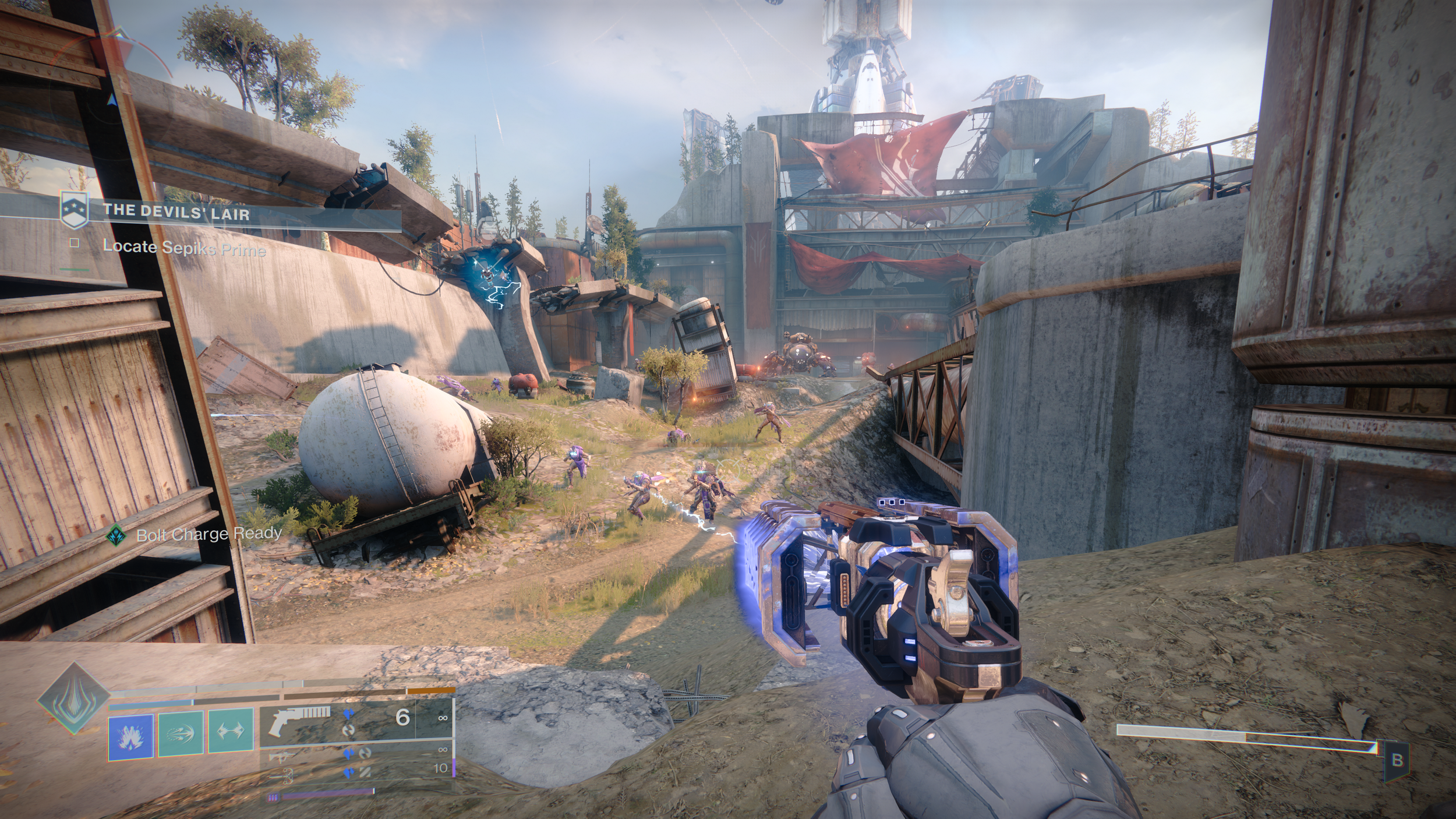
Encounter 2: The Brig Surprise
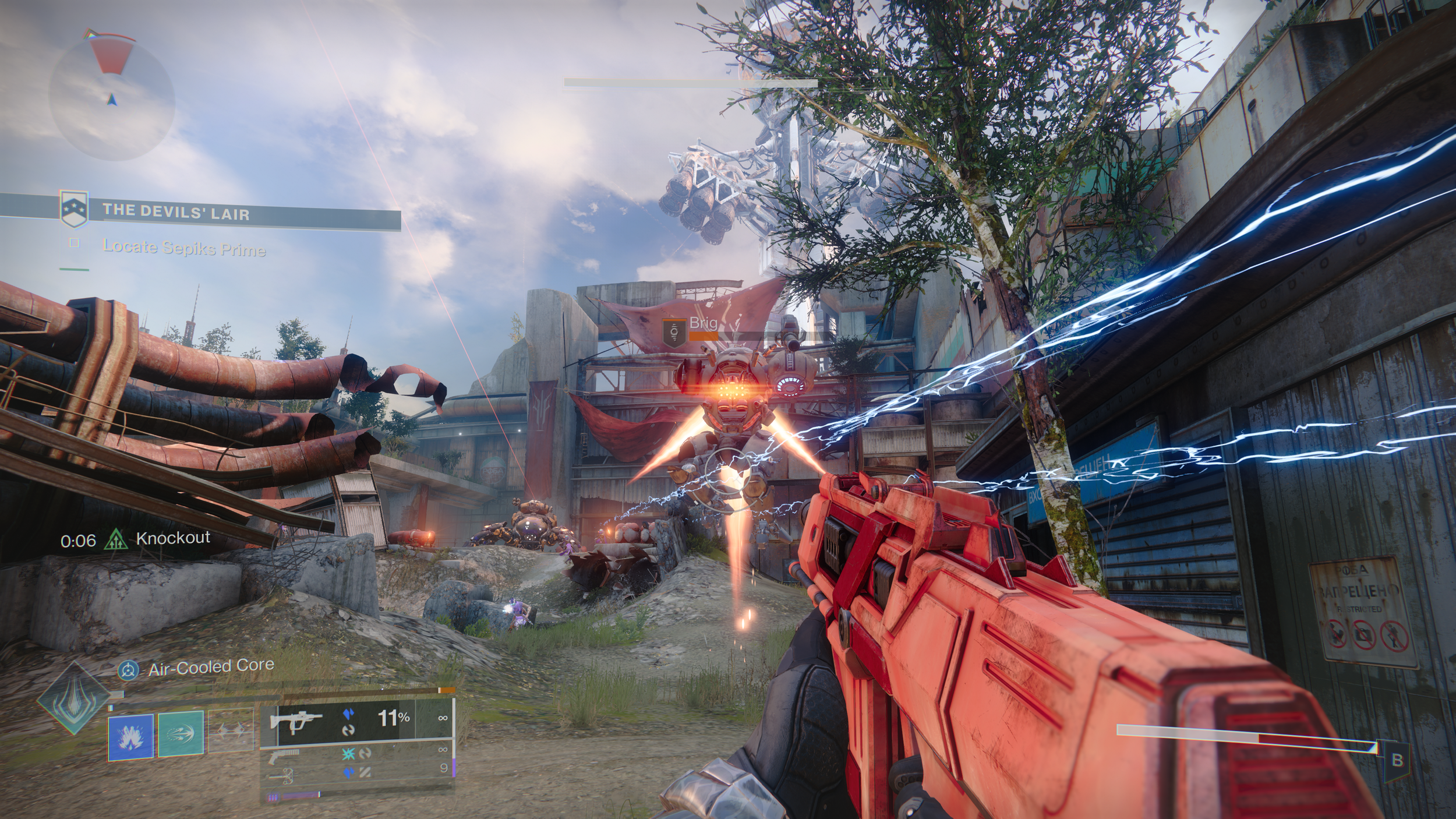
Remember when I mentioned that awesome bespoke spawn animation the Spider Tank has? Seeing that brand new enemy introduced in such a grand way in the original strike had a huge emotional impact on players’ memories of it. I found a way to plus that up, tap into those feelings, and take them to new heights with my remaster. At the time that I was working on this strike, Destiny 2’s Beyond Light expansion was being developed, and it featured a brand new enemy type for the Fallen roster: the Brig. The Brig was like the Spider Tanks little brother, a hulking bipedal mechanized walker, the Fallen’s new superheavy anchor for dominating space. They also had a spiffy bespoke spawn animation where they dropped from the sky like a meteorite and unfolded menacingly, ready to wreck face, and seeing that for the first time in internal playtests, I recognized that same feeling I had when I saw the Spider Tank drop from the belly of that dropship for the first time in the D1 Beta. This gave me a design epiphany: I had to put TWO of them in the strike remaster. They were perfect for my design goals: I needed the players to be held back from the Spider Tank long enough that it had its chance to shine, and what better way to do that than a heavily armored walker standing right in the middle of the two paths to the best positions to take it down. Their unique spawn animation also gave me a fantastic opportunity to subvert player expectations of the now familiar Spider Tank drop off moment. Through careful use of trigger volumes and finely balanced timing delays in the script, I crafted a new spectacle: First, the dropship flies in and the Spider Tank drops off its belly, just like you remember. But just when you think ‘oh, its the good old spider tank encounter again’ BAM! A new enemy you’ve maybe never seen before drops out of the sky. As the first brig unfolds, and you begin to come to grips with what’s just happened, BAM! Brig number two. You realize this encounter is MORE than what you remember, and you better pick your jaw up off the floor because the Spider Tank is targeting you. Unfortunately, there was only one problem: the Brigs were made for the Beyond Light expansion, which introduced a new Fallen subfaction themed around the expansion’s snowy environment, so the brigs looked out of place compared to their standard House Dusk compatriots. However, the addition of the Brigs to the encounter was so well received during testing that the combatants team decided to build a House Dusk variant of the Brig to put in this strike, and anywhere else in the future that activity designers wanted a Brig alongside their regular Fallen. I was honored they too saw the potential in my design.
Encounter 3: Making a Starship From Bicycle Parts
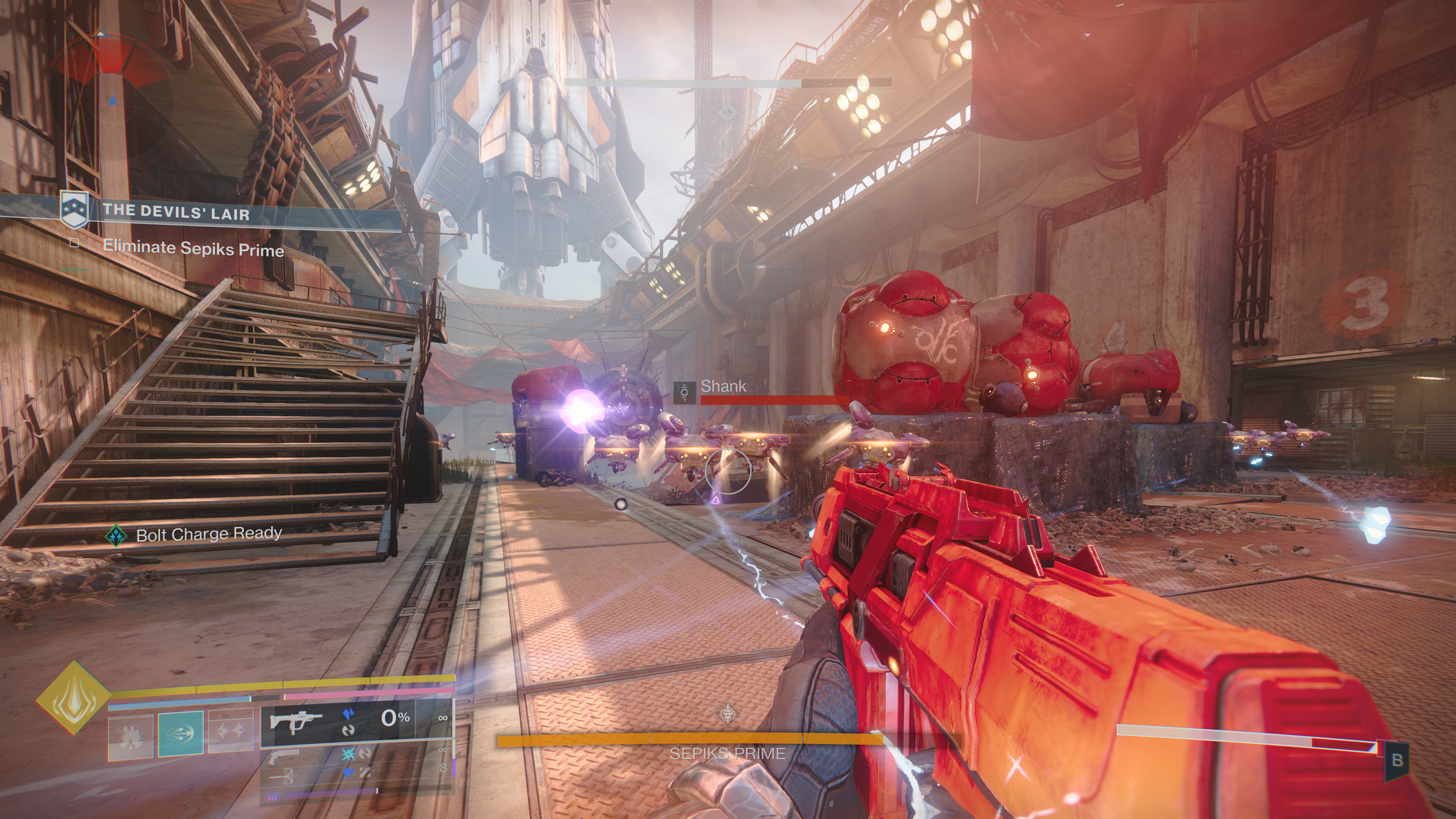
The the third encounter was the final boss: The iconic Sepiks Prime. Sepiks Prime was a massive version of Destiny’s Servitor Fallen combatants: big purple floating robotic spheres that fired large blasts of purple void energy out of their central eye. I thought going in to remastering this encounter that this was going to be the simplest of the three, but I ran into a problem that ended up requiring some of the design work I’m most proud of to solve. D2 players could simply output far greater damage than D1 players, D2 featured much more powerful and accessable weapons and abilities, as well as much wider and richer buildcrafting to enable players to multiply that output. This meant players using even some of the most basic DPS strategies in D2 could literally one-shot poor Sepiks, and even after tripling his health he’d still go down too quick. In D2, almost all strike bosses featured a mechanic we called an ‘invuln phase’ where upon a player reducing the boss to a certain threshold of remaining health, it would retreat and shield itself with an inpenetrable barrier. Players would then either have to fight waves of reinforcements or do a special mechanic in order to lower the barrier and keep doing damge. I needed to add a mechanic like this to the Sepiks fight in order for him to take his place among the other D2 strike bosses. I was then faced with the challenge of how to implement this mechanic with minimal support from combatants design, VFX art, character art, or tech design. If I was going to make this invuln phase mechanic unique and memorable, I was going to have to get real creative and use all my knowledge of Bungie’s proprietary engine to build a full fledged mechanic reused parts and clever workarounds. I knew that in order to make this invuln phase work, it needed two things: 1) context - players had to understand what was causing the boss to be immune, and what they could do to break through it. 2) a distinct novelty - the boss needed a ‘special move’ that made it uniquely memorable. My solution to this problem centered around using cleverly disguised and heavily modified stock combatants jury-rigged into a special ‘weapon’ for the boss. I placed four normal servitor enemies in cages of invisible geometry high in the air surrounding where Sepiks would be during his invuln phase. These servitors had their AI brains modified to prevent them from moving or using their special abilities and to be extra aggressive with their primary weapons, effectively turning them into an array of turret guns floating high in the air around Sepiks, perfectly positioned to rain hell on the players below. During the invuln phase, Sepiks would teleport to the center of the arena, high off the ground. the four turret servitors would spawn around him and begin blasting the player below, and granting the boss an inpenetrible shield. In order to lower the shield, players needed to simply destroy all four turret servitors. it was simple, elegant, and spectacular, and accomplished all through existing Activity design setup alone, no bespoke tech, combatants, or VFX. But it needed one more thing, I needed to make it absolutely clear to players that these turret servitors were connected to Sepiks, were part of him, and that their destruction would lower the shield. It was then that I remembered the giant servitor public event that occurred in multiple other destinations in D2. That event featured another giant servitor boss combatant very similar in behavior to ol’ Sepiks, who occasionally summoned a squad of three servitors on the ground below him to back him up. These servitors fed a beam of energy VFX back up into their boss servitor, and I thought that VFX effect would be the perfect way to show the player that my turret servitors and Sepiks were connected. So I cracked open that public event encounter and started reverse engineering the setup for that VFX beam. Once I realized that the giant Servitor boss combatant pattern from the public event was actually a child pattern of original Sepiks, I knew the VFX were going to work, and they did. Now Sepiks prime had his very own unique attack and invuln phase mechanic.
Encounter 3: High Difficulty, Heavy Metal
The awesome soundtrack is a truely unforgettable element of the original Sepiks prime fight. The score for this fight was so awesome that a member of the Destiny community created a heavy metal rendition of the bossfight score, and this heavy metal version actually got featured in the game. Fun fact about the Devil’s Lair Strike: me remastering it for D2 was actually the second time the Strike had been remastered! The strike had gotten a reprise during D1’s Rise of Iron expansion, which featured a corrupted smartmatter element called SIVA that the Fallen in the Cosmodrome were integrating into themselves. The Devils Lair got remade with the new Splicer Fallen combatants, our boy Sepiks got a SIVA-zombie makeover, and the community made heavy metal soundtrack version was added to the boss encounter. I was really torn over which version of the soundtrack to use in my remaster, the original was nostalgic, but the heavy metal version was so badass. However, I found a way to do both! D2 featured a player elective difficulty system, where players could chose what difficulty level to play the strike at. I tapped into that system in my scripting for the encounter, and played the original soundtrack at normal difficulties, and the metal soundtrack if the player chose higher difficulties. The community absolutely loved it!